Showing posts with label chicken. Show all posts

Tuesday, April 2, 2013

Welcome Bradley and Darth to the flock.

Bradley- Jubilee Indian/Cornish Game rooster
Saturday we picked up 2 more Indian Game roosters. Bradley is a Jubilee male and Darth (Darth Vader Jnr) is a dark. Don't ask me where their names came from, but that was their names when we picked them up, so I guess they'll stick. But as Darth Vader Jnr's dad was Vader, (guess because he was a 'dark' Indian/Cornish game) then I think we'll stick to Darth for short.
Darth- Dark Indian/Cornish Game rooster
These boys are a little older than the others we have, and are already crowing.  They are settling in well, and definitely have their own personalities; Darth thinks he's a ladies' man, whilst Bradley likes and early night.
So hopefully when the girls start laying, we now have a few males; which we hope will increase our chances of fertility. And now with the wide variety of colours in the breed, we hope to get some interesting results too.

Wednesday, February 6, 2013

Chicken Day

Our dog’s love chicken day...


Nothing goes to waste on 'Chicken day'

Matt and I however have mixed feelings about it. This time being more sombre than usual, but we do enjoy the rewards at the end. As 'Chicken-day' is generally as weekend day event, and depending on the numbers can be a few hours. It is something we often (as this time) do on a Sunday, so Sunday dinner tends to be chicken... fresh, free range chicken.

Indian Game dressed out- Sunday Dinner

As part of rearing chickens, we end up with a number of roosters. So when we began incubating we decided we would keep a few hens for our own stock, sell what we could and the remaining (likely to be roosters) would be for meat consumption. At the end of the day we eat meat, chicken being a regular food source for us , as many households. So it was a process, part of this lifestyle.
Now we have raised a number of birds for food now, and this was no exception. We had the remaining 2 Indian Game roosters and 2 ‘returned’ Rhode Island Red crosses. These we have had since before Christmas and have joked they were ‘Red Roosters’. Which if you have ever been to Australia  would know is a fast food restaurant, specialising in roast chicken. These guys were the product of the eggs we hatched for our friends. Many of the roosters either didn’t sell or out of the giveaways, some were returned. And these 2 made it back to us.
Now neither of us take pleasure in the process, and I have been asked many times “how can you do it?” But the reality is, if we don’t eat our birds, we’re eating someone else’s, and at least we know how these lived. Besides once you’ve killed the bird, you can’t take it back. So you just get on with it, and do it justice. Or it was all for nothing.

This time however our “downsizing” involved the culling of a few hens that are no longer laying; our ‘spent hens’.  Now don’t get me wrong, we have a few pet hens already and they will stay and live out their days; as we have always been more emotionally involved with our original suburban flock. We did however make this decision prior to purchasing our next batch of layers. As a perpetual cycle of replenishing layers and keeping our older birds would be expensive (which isn’t everything), but would also limit our numbers, due to being able to offer the birds space. And in the long run, would affect their quality of life.    

Indian Game

Rhode Island Red cross

RIRx leg meat

So first we processed the Indian Game’s were at least 6 weeks younger than the RIRx’s and substantially smaller in stature, yet the Indian games had far more meat on them and we were surprised by how white the meat was, as we were expecting it to be more of a ‘game bird’. But we were especially surprised by how lean it was- not that was such an issue for us, given we skin our birds anyway, but anyone else out there considering a ‘meat bird’ I would highly recommend these.

Leg & breast v feathers

The RIRx’s on the other hand we all feathers. We actually removed the legs and breast meat, then stripped the remaining skin so that we could utilise the carcasses as bait for crabbing. Felt like the most efficient use of the bird. As I would not recommend rearing Rhodies for meat, which is hard when breeding produces so many roosters.


We used this process for the ‘spent hens’ too. As whilst many will tell you older birds are stingy or tough, I couldn’t in good conscience just kill them because they had surpassed their use.  So I boned out the legs and last night I made a very large, very tasty chicken and vegetable pie. I will admit, I think to cook older bird meat you do need to cook the meat slower. So crock-pot meals, pies or curries would be ideal.  

Left over 'Spent- hen pie' for lunch

Pigs, Roosters, Chicken day... what a weekend

What a busy weekend! Highs, lows and everything in between.
From the intended downsizing of our flock, resulting in a tasty chicken dinner Sunday night, but I will come back to “Chicken Day” separately.   We did also have a few unintended losses, but on the whole the weekend was productive.

Firstly, on the piggy front. Our “Berky” is doing really well. So Friday we separated him from Mum, to the relief of Mum. Berky has been reasonably calm during the process, though he has been following Mum from inside the pen as best he can. I am looking forward to being able to reunite them next week. I am hoping this is long enough and that he is big enough. As we intend to swap the bore over- so Smokey is to be penned for a few days, so Berky can settle a bit. And hopefully his separation will increase his interest in our other girl, who is due for season in the following few days.

Berky

Absencemakes the heart grow fonder...
as the case may be. I just think the familiarity between the two and her dominance over him appears to be interfering with our Berkshire breeding. So I guess this is my last attempt to save Streaky’s bacon! As after this, I (or she) is running out of options.
Mum enjoying her freedom
Given the success of our first litter I have updated our Pig page. I have also updated our bird related pages. So whilst I have left a ‘Poultry’ page, it is mainly in reference to how our flock expanded and generally how to get started. You may notice that there is now a Chicken, Duck, Goose and Turkey page. This seemed a little more appropriate to address the individual bird species, as our flock has
now expanded... again. Somehow, poultry seemed a little general, and the page would have gone on and on, if I had discussed our progression into each species and our intentions/ aspirations for each.

So back to  the past weekend, Friday was also the day we lost our resident Sussex rooster “Rocky”. Now in the grand scheme, Rocky was not in the list or downsizing; but vital to retain for future restocking and production... and he was more of a pet.
Unfortunately we don’t know what was wrong with him as such. He hadn’t really been himself for a few weeks; looking dirty and a little soggy. Pretty much since our first round of rain a few weeks back. But we mostly put this down to the lack of dry areas for him to dust bath. Though the girls all looked perfectly clean, though they sleep inside the hutches and sheds where Rocky roosts outside the door- almost like a guard, but asleep on duty!
Then in the week although he was still first to the gate and eating well, but he looked a little unsteady on his feet, and not quite his assertive self. So we separated him. Tried worming, just in case; though the flock had, had their water treated not that long ago. We tried sprays for respiratory infections, anything and everything we could. But he deteriorated and finally gave up, with us there Friday afternoon.
So Sunday afternoon; against the trend, we collected a young bird from another bloodline that we had enquired about over the weekend. A little quick I guess, but at the moment he is a nice looking bird. Not “working” as yet, but appears to be settling in with the hens far easier than Rocky did- at least they are letting him eat! So I haven’t had to stand guard and protect this one. So hopefully by the time he is ready, so will we be.
Sunday was also a tidy up day and rearranging of a few things.  
The reduced size Indian games and honorary member (our Old English Game cross hen- thinking a cross may produce meat birds? Either way she’s a better layer) moved into the small poultry shed, with the addition of the enclosed run (more for the OEG cross). This we placed on the currently empty (well weed ridden) raised garden bed.... this is my idea of weeding and fertilising!
This freed up the small hutch, so our young chicks that we incubated and hatched for my nephew moved from the brooder box to the small hutch outside.
So with the brooder box vacant we tidied the shed and yard... Which any shed owner would understand is not a small task.

As well as making headway with the garden, pruning the various fruit trees that we had planted last year- the surviving ones are flourishing. As is the grass, so we mowed- yet again! And made a start by clearing the veg patch, ready for replanting.

Thursday, December 6, 2012

3 weeks til Christmas, 3 days til family arrives

OK so it has been pretty hectic here, though we haven’t got around to half of the things I had hoped to blog about! We have had a ‘heat wave’ it officially reached 34 degrees (here on the coast, it was higher inland). Which doesn’t sound that hot, but when you consider the humidity is about 90%... it hot! So many of the jobs I had intended to get done are less than appealing during the day. And morning and evenings are very short. And as for rain, we had a thunder storm Tuesday, that was more of a light show than anything- 1mm of rain!
I have begun weeding, I at least have the path done and looking neat, just the herb garden, landscape gardens and veggie patch to do (probably early tomorrow). I did however start some seedlings, and they are doing quite well in the shed. I just hope I have more success when transferring them, than I have in the past.
Today is actually my last day at work for 2012, though Matt doesn’t break up for a few weeks. I must admit it feels weird, but as my family arrive in 3 days, I will be grateful for the extra time to get all the things done that I had hoped to in the past few weeks- nothing like organisation! I haven’t even posted my cards and gifts for those who are not coming... just hope the make it in time!
My family actually leave their homes tomorrow, even though they arrive here Sunday. I admit it’s a long trip- not something I look forward to. But I am looking forward to seeing them!
For those who have been following, we have been counting down to another arrival, due shortly. So penning off the pregnant sow, was not a job we could put off any further. So last night we built  a pen around their main shed.  I am just wondering how much trouble she will be, as she has never been an easy animal. And pigs are social, we wouldn’t have done it unless we felt it was necessary- we penned her off for her own health and that of her impending litter. We had hoped she would have started farrowing and we would have just built the pen around her chosen nest. But as with everything else since we have had this one, nothing come naturally. So we have used the main shed, and she has her own water tank... but she was not happy. See whether it is all still standing by the time I get home from work! 
Another issue we had prior to my family’s arrival, was our ever increasing flock. We did process our roosters and a few ducks last weekend, so our freezer is looking rather full now; in preparation for the extra mouths. Although we also acquired 2 more Rhode Island crosses from a friend of a friend. They were from the batch we hatched for the initial friend.
Unfortunately we have also ‘lost’ a few others. I found one duckling tangled in some of the fencing- as they wander where veer they feel. It couldn’t have been there long, but apparently it was long enough for it to die- think it broke its neck. Another just vanished last week, so we are now down to 8.  I know we had intension of reducing our numbers, but this was not what we had in mind.
On the opposite vein, we had limited success with crossing our Indian Game rooster without laying stock. After a week we candled the eggs in the incubator all of the other rooster over the few hens appear fertile; whereas Ronnie only appears to have had success with one. I just don’t think he has the dominance or the speed and agility. So we have put in another batch from Rocky (our Sussex rooster), now he is back with his girls. Mainly as I wanted chicks whilst my nephew was here, we also had a few duck eggs, so they went in too... so we will check them this weekend. 

Wednesday, November 21, 2012

Poultry progress... let the egg tally begin

The geese have settled in well. And the ducklings are growing in both size and bravado! They still manage to squeeze through the fencing, so they wander freely around the front garden and hel themselves to the Indian game’s food supply.


As for the chickens we will be collecting eggs this week for our ‘meat bird’ program; as we swapped our roosters around a few weeks back now. And they should have settled into their new homes and be ‘working’ sufficiently.


As I have explained in the past, most commercial ‘meat birds’ are bred from, or variations of the Ross cob. This cross was bred for its mass, weight gain and appetite.  However I struggle to rear these birds due to their rapid growth and appetite, limits their natural behaviours and their quality of life is affected.  Struggling to stand or walk, sitting in their own mess, eating! We even had to remove their food at night to stop them eating constantly... and ended up rehousing them in a shelter with bedding on the floor, as they could not manage ramps or steps; but then this increased their risk to predators.
Young Indian Game's
So we made the decision to breed and rear our own table birds, that will hopefully be capable of laying eggs. Similar to that of http://castlefarmeggs.co.uk/?page_id=787 . In the hope that they would be able to free range better and have a longer, better quality of life. The idea being we cross a good dual purpose/ or larger breed layer, such as the Sussex or Australorp x’s we already had with a game bird. We have had an Old English Game rooster cross with our layers, and the roosters from that combination carried a fair amount of quality meat for their size. However they also carried the athletic and aggressive traits of the rooster; the same reason we no longer have him. However these are also supposed to be a good free ranging layer. So I still have hopes for the few pullets we have raised. 
But in our quest for a table bird we decided to try them with our resident Indian Games, or Dark Cornish. This breed is heavier, carrying a lot of breast meat and although still flighty, they are far less aggressive... though the females can be pretty feisty when protecting their nests. Matt says they look like a roast chook with their feathers on. And I must admit they do have that neat shape, so hopefully a cross between these birds and the layer may work.
We are unsure which will work better; the Sussex rooster over the game or the Indian game over the layers? I have read a few things that suggest Sussex over Indian game produces a better table bird, though the productivity is likely to be less as Indian game hens produce fewer eggs per annum. Though the layers produce more regularly, there may be issues in regard to whether the Indian Game rooster is capable of servicing the females sufficiently for a good fertility rate due to his stature.
We know both roosters ‘work’ as we have had a few batches of layers from Rocky and we currently have 9 young Indian Game pullets and roosters from Ronnie. These birds have gorgeous patterns and colours through thier feathers- something I hope will pass to thier young, even when crossed.  
We are hoping that these birds will still produce relatively productive layers. As when it comes to maintaining our laying flock, we obviously generate a supply of roosters. Therefore the most efficient format would be to have a single strain of birds that we could raise the females as layers and the males for meat.
So this week will begin collecting for incubation. I will be marking the eggs as to their source (which rooster over which females). So we can assess the virility of the roosters and the success of the resulting offspring as either layers of table birds. So expect a regular egg collection report, this probably wouldn’t hurt so we know when the Old English Game cross pullets and Sussex and Sussex-Australorp cross pullets begin to lay.

Friday, November 16, 2012

Chicken Keivs

Sorry this is not a recipe for Chicken Kievs, though that may come in time. What I wanted to discuss was last nights Jimmy and the Giant Supermarket. I know I have mentioned this series before, as it aired in Australia that week. And begun with rose veal. I must admit I read the best tweet the other day, where a lady asked if anyone had tried rose veal and to put in perspective (in terms of misconceptions), she added "its just like eating lamb". But back to the keivs'. 
The series ended last night with the ‘reinvention’ of the cheap chicken Kiev. I have to admit I was quite impressed with Jimmy's passion. Even if I wasn't too impressed with Tescos buyers. But in fairness they kept to thier word and bothe the kiev and a re-worked version of the sausage made it to stores. (Let's just hope the rose veal makes it too). So Woolworths, Coles this can be done- take notes!
The keiv was probably his most successful product- both in terms of early sales and in meeting the Tesco expectations, as he found a meat source that was cheaper than their commercially bred broilers.
Majority of commercial producers use purpose bred ‘broilers’; a selectively bred Ross cob chicken. I myself have purchased these birds from a hatchery (via a middle man) in the past. I posted at the time of my concerns regarding their development and quality of life... I would not have them again.
Broiler vs layers (same age)
As these birds, even when free ranged put on weight at such a rate that their bodies struggle to support. They are lethargic and do not scratch, or do anything normal chicken do; guess this is what makes them ideal for mass production. They will feed day and night, if they are allowed. We took the food away from ours at night, probably why ours grew to about 8-12 weeks, where commercial birds take half that. By this time we had to kill them, as their quality of life was suffering... we even had to provide them with a new shelter, as they could not climb even the smallest ramp.
 Jimmy’s cheap chicken was actually chickens! “Spent hens”, now I am not a fan of this term, but it is a reality that hens raised in the most ethical environments have an expiry date. This is true of battery farmed hens too, but these would not be in any condition to be sold as meat and are often sold for other purposes. The lucky are sold as ‘recue hens’, something I am in two minds about. As whilst the animal deserves a chance of a good life, by purchasing their ‘waste product’ you would be financially enabling them to continue... but this is off topic.
It is true, and I have heard others who breed chickens discuss it in the past that a hen’s prime for laying is its first year. As they do not lay until they are 5 months old. Most commercial and many domestic birds will become surplus to requirements at 18months of age. This may seem a little harsh, but by this time they have served their purpose and are no longer financially viable to support and will be dispatched, one way or another.  So I guess a cheap alternative free range meat is a good outcome. I guess there is a stigma about older chickens being considered ‘tough’. Though in the instance of the Kiev the firmer meat was an advantage and the age increased its flavour. I guess it is just a case of using them for the right purpose. They may not be as desirable for a Sunday Roast, but are ideal for mincing or slow cooking. So why do we breed young birds for these purposes?  
This got me thinking about our own birds. We have a few older birds, we still have 4 of our ‘originals’ (we had 3 Rhode Island Red crosses, followed by an Australorp, Light Susse and a Welsummer- we no longer have the Australorp or whitest of our 3 RIR x’s) and we have agreed that these ladies have earned their keep and will live out their days here; guess we think of them more as pets than livestock. 

Originals

They still produce eggs; they are just more temperamental when it comes to cooler weather, or the wet. We currently have our Welsummer in the front yard; keeping Rocky and our Indian Game hen company whilst Ronnie enjoys some time with the rest of the flock. And I have collected 3 eggs from her in the past week. So whilst her laying has slowed and is more than sufficient for the home kitchen, it would not be viable for commercial hatcheries. But I have to be realistic, we cannot keep raising new birds to maintain our egg supply and feed the older birds too.
We have four ‘commercial layers’ (Australorp crosses) bred for their egg producing qualities and a Rhode Island Red bought as day old chicks last July/August. And I have been told the commercial birds will slow up more dramatically than our other breeds/ crosses too. So I guess I have to be realistic that the pullets we have to replace them, will replace them.
They are lovely birds, but I am not emotionally attached to them in the same way we are with the ‘originals’. And with a current poultry count of 61 birds (between geese, turkeys. ducks, ducklings, chickens, pullets and roosters) we have to be realistic, this not a number we will be able to maintain. So whilst some were bred ‘for the pot’ and I have reconciled myself with the fact they have had a far better and longer life than they would have elsewhere. I guess my next emotional challenge is to accept that some of our hens will eventually (and probably in the not too distant future) reach the end of their prime and may themselves be destined for the Kiev.   


Monday, November 5, 2012

Weekly check in

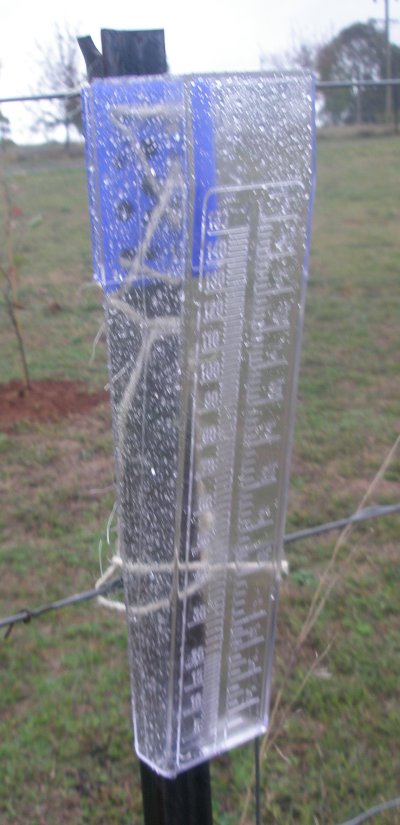
Total rainfall for last week- 12.5mm, so ½ an inch.
Not a huge amount, especially in Queensland standards, but the garden is looking better for it. I did water the veggie garden and the trees last night, as it had been dry for a few days, and it started raining. Though it only registered ½ mm in the rain gauge, so still happy I did it- even if it looked silly watering the garden in the rain!

This weekend was once again dominated by other events. I was coordinating the marshals for the Tri Clubs corporate Triathlon- our first. It was bigger than we had hoped for and went well. But it took up about 6 hours of Sunday morning. But at least the rain held off.
Saturday we went into town (though we didn't ride) we met the social riders for coffee and a catch up, then had a list of errands to do. Followed by restocking of our freezer.
We had intended to add a few ducks as well, but we were tired and running out of daylight hours. But the Old English Game roosters had to go. They were a little younger than we had intended culling them, but I fear if we hadn’t, they would have. Well they already had, with the Rhode Island Red x EOG and had begun picking on another. But given the size on their nuts, no wonder they had begun fighting; the testosterone in that pen!
On the plus side we have 4 fairly meaty chickens stocked for our visitors. I must admit they were not the biggest or heaviest, but meat to size ratio was very good. 
But as a ‘meat bird’ we were quite impressed; the meat was very lean, slightly darker than other chicken breed we have raised, but not gamey. I am really hopeful that these characteristics will also pass on from the girls; as they are due to start laying in the next month or so.

I had intended to write an instruction blog on how to skin a chicken, but I found it quite hard to hold everything and take pictures. Plus it was becoming increasingly difficult to not get the camera messy. I think I will attempt this again, but by document someone else.

On the subject of ‘meat birds’, we finally swapped our roosters over; giving Ronnie a run with the general flock. And Rocky some time with our remaining Indian Game hen. We know Ronnies’ fertile as we have 9 Indian Game chicks running around out the front and have had quite a few batches of layers from Rocky. But it will be interesting to see if there is any difference in ‘productivity’ or meat quality of one over the other.
I suggested the Indian game over the layers should be more ‘productive’ as they lay more. However I have read that there may be difficulties in the males of this breed reaching the hens to breed successfully. On the other hand Indian Game hens are not as productive, but Matt read that this combination produced a better quality of meat… I guess only time will tell.
We hope to incubate some eggs in about a fortnight, so I’ll keep you up to date. But at the moment, Ronnie seems a little overwhelmed by the whole experience. And has already been challenged and chased by the Turkey.

As for our other little ones, the ducklings are becoming increasing confident and cheeky. Raiding the Indian Game chicks food daily; though they are having more difficulties escaping in a hurry, as they no longer fit through the mess that well.

The Indian Game chicks themselves, are looking good. We think we have finally sexed them; believing we have 4 boys and 5 girls. The defining factor being that some have begun to develop the blue, green and purple sheens and flecks in the feathers and others have not. As with most birds, the males are more flamboyant. It shouldn’t be too long til their crowing, so guess we’ll know for sure soon enough. Is strange though, as there has been little differences between the males and females, not even comb or tail feathers. The only other characteristic we have picked out so far has been possible leg thickness (boys being thicker) but really this would vary bird to bird anyway.  Hopefully he will provide a good cross over our utility layers and it will be very interesting to see the results of him over the Old English Game crosses.


 Our new residents appear to be settling in well. We herded them into the rear garden (with the general poultry population) and out of the run that they spent their first day in. But are yet to leave them loose around the house. Which is ultimately where we want them.
The  lady we adopted them off, reported that she had, had her first snake in 11 months (the time she had had them). So I am hoping to progress to having them roam around the whole house yard, as I want them to keep the snakes away.  But for now, they appear to be adjusting well and have made no attempts to fly away. 

Over the past few days, it has taken 2 of us to herd the geese into the run before we have been able to go anywhere. The majority of the flock (even the ducklings), know the drill and happily run ahead of me, when I am carrying a food bucket. Whilst the geese were interested, curiosity would only lead them so far. They fell short of walking willingly into he run.
As I was on my own this morning, I had expected this to be quite difficult and to be running around. But fortunately they just wandered in after the other birds; asserting their dominance over their share of the food. They eat together taking it in turns to watch and defend. Only the ducks (or more so the ducklings) are allowed anywhere near.


Wednesday, October 31, 2012

Spoiler Alert! Jimmy and The Giant Supermarket

Tomorrow night is the Australian (free tv) screening of Jimmy and the Giant Supermarket on SBS. 8:35 Jimmy And The Giant Supermarket "Meatballs - Rare breed pig farmer Jimmy Doherty goes inside Britain's biggest supermarket, Tesco, to come up with innovative ideas to produce equally cheap but higher-welfare alternatives to their best-selling meat products. In the first episode, Jimmy tries to transform Tesco's own brand meatballs. In doing so, he spots an opportunity to tackle one of dairy farming's biggest secrets - the killing each year of tens of thousands of male dairy calves because there's no market for them. (From the UK) (Documentary Series) (Part 1 of 3) PG CC" This guy has had a number of shows back in the UK… and as he is a ‘celebrity’ rare breed pig farmer, I am keen to see how he is as a host. (www.jimmysfarm.co.uk)
As for the subject, the idea that the supermarkets own brand products can be ethically produced for the same price is AWESOME! I’m not saying it wouldn’t be a challenge, but Tesco has agreed that it will adopt these if it can be done. Now Tesco have been involved with a few innovative products /TV series- good PR, yes. But why not? To be fair the UK market is far more competitive than here (well Nth QLD at least). So I guess the saying any publicity is good publicity works. As Tesco remain the UK’s largest market share. I have to admit, I have read what this ‘opportunity’ is that they have mentioned. And its not a new concept and he’s not the first celebrity foodie to promote it. Personally I use the same sort of principle at our place when it come to producing chickens for laying and then chickens for consumption… meat. There are many out there that fail to realise that to produce milk, a cow need to have a calf. Much like any other mammal.
Now female calves, being girls, will obviously be of use to a dairy farmer in their future years. Or be viable resource for sale, so are raised as such. Males on the other hand, are not useful to a dairy farmer; who in all honesty is paid to produce a product. A product that they are required to share with the caves. So to achieve the greatest output possible male calves are culled. They offer no value to the farmer, for sale or stock and deplete the milk stores. Similar process happens in many hatcheries (producing laying birds). Roosters (cockerels) are not of use and therefore would decrease profits to feed. So most are killed, once sorted from day old.
We made a decision when we begun breeding our flock that males would be grown for meat or sale, regardless of their breed. Obviously certain breeds make better table stock than others, but chicken is chicken. I have often wondered how much ‘potential meat’ is lost through modern practices. I mean raising produced based on type, species or breed of animal for its ideal purpose makes sense. But on the other hand, what about anything that is produced as a subsequence that doesn’t quite fit the brief. I mean the potentials such as ‘pink veal’ of dairy billy calves (told you this was a spoiler) and the roosters from hen hatcheries. But can we go further? What about the chickens produced for meat sales that do not make their weight targets? It is common practices for birds that are below weight, by a set time scale to be culled… I have often thought that whilst they will not make the desired weight for roast chickens or whole chickens on the supermarket self. Surely they could serve some viable purpose. I understand whilst the farmer may not wish to feed it further, as it would be literally eating into its profits. But that bird still carries a food source suitable for other chicken products or uses. Just discarding that life as it doesn’t meet a standard and timescale appears pointless! The issue with my theory that these deaths should be utilised is that the farmer may not have a contact for such produce. And as this source is based on stock not meeting a standard, you can not guarantee supply, how could they? They may not be able to provide to another buyer, contractually. Furthermore, they have to transport that animal to slaughter, separate it and transport it elsewhere. So I am far from blaming the farmer for making a living. I guess I am merely pointing out that there are flaws in many of today’s practices, other than the obvious animal welfare conditions that often get discussed. Many farmer would like to farm more ‘ethically’, but it is’t financially viable. And not many have an ‘innovative’ foodie, backed by a large supermarket chain offering cash for diversifying into their bi-products. But there are ‘opportunities’ out there. I guess much of the problem is our expectations and preconceptions as consumers. I often get frustrated with people who will only eat certain cuts of meat; the popular ones, such as chicken breasts or certain chops or ‘the best steaks’… Well guess what? An animal was killed for that particular part. So by all means appreciate the cut and enjoy it, but have the decency to appreciate an animal was responsible for producing that. So subsequently it also produced less popular cuts. How many people turn their noses up at offal? It was a standard meal to my grandparents. Don’t get me wrong there are bits I have tried, which I have little interest in eating again. Like chicken feet and pig’s ears. But they are viable protein sources and should not be knocked. I admit with our birds, chicken feet are either fed to the dogs (as a treats for days to come), or I was delighted when a work colleague asked Matt if we could save the feet for his father in future. I was happy to oblige and he apparently serves up an awesome Yum cha. And I am not necessarily just discussing meat. Does it not strike you as strange that an apple or a capsicum (pepper) in Woolworths or Coles (Asda or Tesco) look significantly more pristine than those at your local greengrocer, farmers market or local veg stall. I am not saying they are inferior, quite the reverse. I mean the stuff I grow in my garden has far more lumps and bumps than the supermarket produce does. And I know this is not that they are far more competent growers than I am (even if that is probably true). Also I have far more exciting varieties of fruit and veg, that you just don’t see on the supermarket shelves. It seems ridiculous that so many people are struggling to put food on the table and farmers are struggling to get a decent price for their stock, when perfectly good potential food is going to waste. Am still looking forward to watching the show. How about you?

Monday, October 22, 2012

Egg bound chook


This was a first for us... When I first saw this old girls back end I was most alarmed, but funnily enough I knew exactly what it was.
Matt thought it was something else, as it did seem quite servere. Although I did consider, maybe she had a prolapse- possibly due to age. As we have only had a few eggs from our 3 Indian Game hens for a few weeks. But google confirmed, she was most likely egg bound.

Egg bound birds, tend to be a result or worm infestation- which was unlikely as they were recently wormed (but they will be again shortly-just in case), genetics or age. The latter 2 being more likely for this hen. But it is when the bird can no pass an egg. This can result in death within 48 hours.
Now this was the second morningy, it looks extreme. But I video'd her to confirm. The bit poking out, is from her pushing so hard. The white/creamy liquid is her urine trying the pass the egg.

Now there were a few conflicting reports as to what you shoudl or shouldn't do. Some advising the only real option was to remove the egg manually. Other saying this was an absolute NO, NO.
As she is a flightly bird (to be honest, they are a flightly breed). So I figured handling could only make it worse and she would have been a high risk for egg breakage. And therefore possible infections.
So we resorted to making her as warm and comfortable as possible. I also read that warm water could also assist in relaxing the area. So I was prepared to catch her and place her in a warm bath, as time was now ticking on. Matt had approached the subject of whether it would be better for her or, as an older bird it would be more stress orpain. Which our interference could cause her death anyway. So maybe she would have been better, being put out of her misery. Having already lost a bird that day I was over awred by the suggestion, but had to admit it was a reallistic option. 
However an hour after this video, she passed the egg and was happily sctraching around the run again.

Thursday, September 20, 2012

One hen down

Went to feed the chickens and found one of our young Indian game hens dead in their hen house. Odd thing though she was lying flat on her back? In the open (well walkway of chicken house). Any other chickens we've lost to natural causes have been nesting and curled up... and they were older (least for their breed) this was one of the trio we bought in may. So she was only about 9 or 10 months old.

Monday, July 9, 2012

With the miserable weather Friday and Sunday consisted of some cooking and gardening.
Following my post on Friday I finished my chutney and this is maturing nicely in the cupboard- made 6 jars!
Recipe: Green Tomato & Zucchini Chutney
700g zucchini, peeled & diced
700g tomatoes, peeled
300g apples, peeled & diced
300g onion, finely diced
300g sultanas
300g brown sugar
600ml cider vinegar
2 tsp chilli flakes
Tbsp grated ginger
12 cloves
2 tsp black peppercorns
1 tsp coriander seeds

Blanche tomatoes, run under cold water and then remove and discard skins. I do this over the container you are collecting your tomatoes in, as they may burst out during this.
Then place all ingredients in a large pan and simmer for 2 ½ - 3 hours. Leave to cool and then transfer contents to jars and seal for at least 4 weeks. The longer this matures the better the quality of the chutney.

I also attempted my Sourdough bread- with mixed success. This hasn’t put me off; quite the opposite. As I now know where I went wrong- had I just done it by hand as per the recipe it would have been fine.

More successful,
but still room to improve

Makes 2-3 loaves
Sponge
650ml warm water
500g strong bread flour
 
Ladleful of sourdough starter

Dough
Sponge (see above)
600g strong bread flour, plus extra for dusting
25g salt

Dough in breadmaker
Once you have your starter, you need to activate it. So if it is refrigerated like mine get t out a day or two before hand and feed it.
 
Also make the sponge the day before, so it can prove over night- place in a bowl in plastic bag.

Now I attempted one purely using my bread maker- this did not work at all.
  
unsuccessful Breadmaker version

So I made a batch using the mixer for the dough, I think this “knocks it back” too much. As the recipe says to knead it for 10mins, then leave to prove for an hour each time (4 times in total)- this is the “knock back” . The dough setting takes 90minsutes, each time, so think it knocked to much air out of it. This was more successful than the version make totally in the break maker, but was still a little dense. So I’m going to make the next lot entirely by hand.

   
Frozen Chicken Stock

Easy store/use- Best Chicken stock!

This weekend I also cooked one of our home grown chooks for dinner. So, as to make the most of the bird I also make some stock from the carcass. Simply by placing it in a stock pot with a few carrots and sticks of celery, cover with water and simmer (on a low heat) for a few hours. I wanted to add this in, as this is a great way to get great tasting stock and is something you have available anyway. Once I am happy with the flavour, just leave to cool. Then this is my storage tip- Place freezer bags over appropriate sized freezer able containers (plastic dishes, tuppaware etc). Carefully fill the bags to level of container (or near enough). Leaving enough of the bag to tie it off.

Then place in the freezer, til frozen and then you can remove the containers and store the bags- use when required.

Other than that Sunday I managed to get some weeding, sowing and mulching done. In preparation for the warmer months approaching. Whilst it wasn’t the most pleasant day, it wasn’t cold and the drizzly rain was probably ideal for new planting.I was also quite excited as the “vine garden”- the section of the veg garden we dug out last year (that became water logged) and has not been built up. So where I intend to grow tomatoes, pumpkins, cucumbers etc- so vines. Had 2 plants growing in ti, which I am sure are eggplant/aubergine plants! We had great success with 4 of these that I bought as seedlings last year; only they were lost in the wet season- or so I thought!


Whilst I was busy Matt made a start on clearing the bed beside the shed. This had a few drought tolerant plants and yukka trees in it when we bought the place. Unfortunately the trees are becoming too big- both blocking the light to the shed, as well as its roots are going to become problematic to the shed’s foundations. So whilst we had hoped to re-locate these trees, unfortunately this was not possible. Hopefully we can save the few smaller trees still.
But other than the stumps this bed will soon be ready for planting, we decided this is to be the herb garden.  It’s close to the house, good sun and partial shade, whilst hopefully providing a welcoming aroma when approaching the house.